
MEDICAL REVIEW BY: DR. MICHAEL WONG, DVM, DACVIM (NEUROLOGY)
If your dog needs an MRI, you are probably worried about more than just the diagnosis. You may also be confused about where to have the MRI performed, anxious about anesthesia, and wondering why one provider charges more than another.
It is completely reasonable to compare prices. Specialized veterinary care can be expensive, and every family has to make decisions based on its own circumstances.
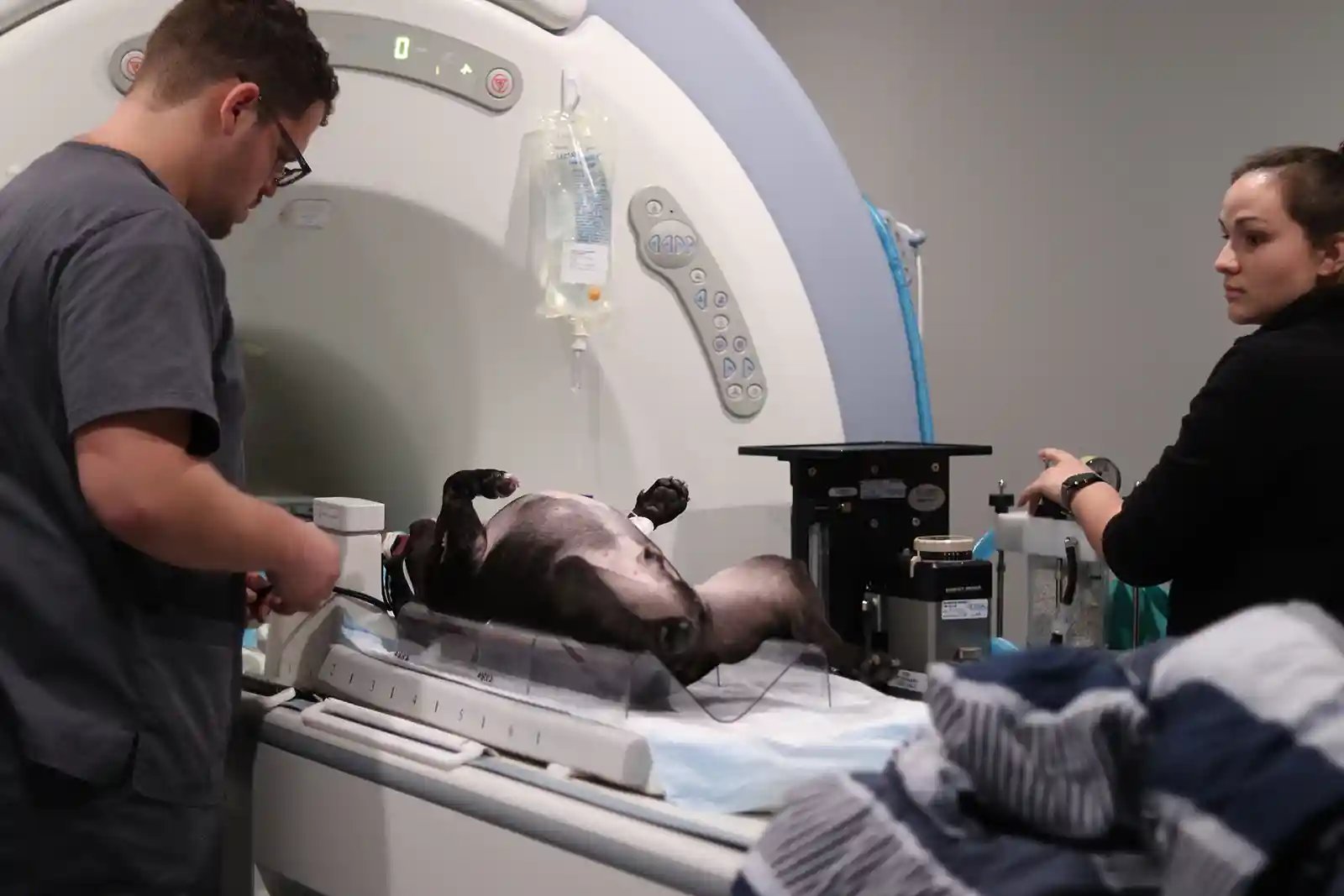
But before choosing a dog MRI provider based on price alone, it’s important to understand that MRI is more than simply putting your pet in a machine and taking pictures. The type of MRI scanner, quality of the images, neurological expertise, anesthesia and monitoring, interpretation of the images, and what happens after the diagnosis can all affect the value of the study.
The lowest-priced MRI is not necessarily the lowest-cost option if it does not provide the answers you need.
Why Does My Dog Need an MRI?
It is possible for very different diseases to cause very similar symptoms. When a dog develops seizures, difficulty walking, back pain, or other neurological symptoms, a neurological exam can help determine where the problem is located, but it cannot determine what is causing it. This is where MRI becomes so valuable.
MRI provides detailed images of the brain, spinal cord, nerves, and surrounding structures, allowing neurologists to look for abnormalities that cannot be seen through an examination or other forms of imaging.
But not every MRI can provide the same level of information.
Not Every Dog MRI Is the Same
When researching dog MRI online, it can be tempting to assume that the least expensive option is simply a better deal, but not all MRIs are created equal.
What is the difference between low-field and high-field MRI?
In veterinary medicine, both low-field and high-field MRI systems are used, but a high-field MRI provides a stronger signal, allowing for higher-quality images to be obtained in less time than lower-field systems.
When comparing dog MRI providers, be sure to ask what type of MRI is being used. A claim that an MRI is “faster” is only meaningful when you know what technology it is being compared to. It is important to compare high-field systems with high-field systems and low-field systems with low-field systems.
Southeast Veterinary Neurology (SEVN) uses a 1.5 Tesla high-field MRI designed to provide exceptionally detailed images of the nervous system with shorter scan times than lower-field systems.
Why does MRI field strength matter for my dog?
Image quality and scan time are not just technical details. They can directly affect your dog's care.
The brain and spinal cord contain complex structures, and some neurological abnormalities can be subtle. Detailed images give a neurologist more information to identify abnormalities and determine their significance.
At the same time, a more efficient MRI can reduce the amount of time your dog needs to remain under anesthesia. This can be especially important for pets who are very ill, older, or have other health concerns.
Ultimately, better images obtained more efficiently can mean clearer answers sooner, which means getting your dog the treatment it needs sooner.
The MRI Machine Is Only Part of the Picture
When looking for a provider, the equipment is only one part of the diagnostic process to consider. Before scheduling a dog MRI, consider asking:
Who will examine my dog before the MRI?
A neurological MRI should begin with a neurological examination. The exam helps determine what part of the nervous system is affected and what diseases are most likely. That information then guides your dog’s MRI.
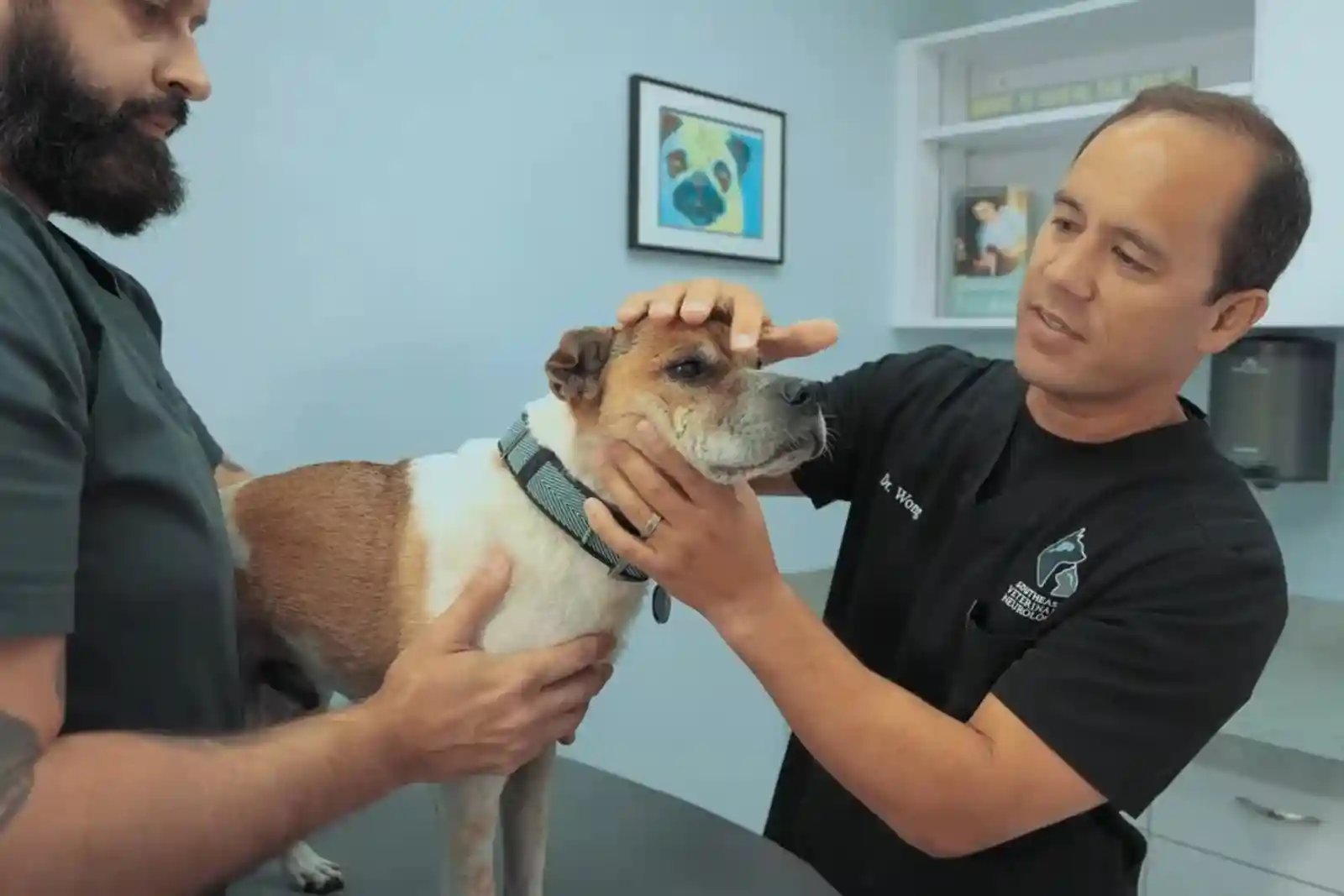
At SEVN, pets are examined by a board-certified veterinary neurologist who specializes exclusively in diseases of the nervous system. The neurologist uses patient history, clinical signs, and the neurological exam to determine:
- What areas need to be imaged
- Which sequences are needed
- Whether contrast should be administered
- Whether additional areas or sequences should be evaluated
- What abnormalities are clinically meaningful
MRI is not simply a matter of imaging the right part of the body and pressing a button. The study should be designed to answer a specific clinical question.
How will my dog be cared for during MRI anesthesia?
Pets need general anesthesia for MRI because even small movements can affect image quality. The type of anesthesia and quality of anesthetic monitoring can vary between facilities, so this is an important part of comparing dog MRI providers.
At Southeast Veterinary Neurology, anesthesia is tailored to each patient based on age, breed, size, health, and medical history, with a specially trained veterinary technician dedicated solely to monitoring your dog throughout the MRI.
Our MRI-compatible multiparameter monitoring continuously tracks heart rate and rhythm (EKG), oxygen saturation, carbon dioxide, blood pressure, and temperature. MRI-compatible ventilators are also available when controlled breathing support is needed. After the MRI, your dog is transferred to our ICU for continued close monitoring throughout recovery.
Together, these measures are an important part of providing a safe dog MRI experience.
Who will interpret my dog's MRI?
High-quality images still need to be interpreted correctly.
At SEVN, the same neurologist who examines your dog also interprets the MRI. Because that neurologist already understands your dog’s symptoms, neurological examination, and the suspected diagnosis, the MRI findings can immediately be interpreted in the proper clinical context.
There is another important advantage to having the neurologist involved in the MRI itself. If something is unclear, the neurologist can review the images while your dog is still in the MRI and request additional sequences or images before the study is finished, rather than discovering later that another MRI is needed.
In most cases, families leave SEVN knowing what their dog’s MRI showed and what the next steps are, rather than having to wait days for an imaging report.
What happens after my dog's MRI?
This may be one of the most important questions to ask before choosing a dog MRI provider, because MRI is not the final goal. The goal is to determine what is wrong with your dog and decide what to do next.
At Southeast Veterinary Neurology, MRI is integrated into a hospital dedicated exclusively to neurological care and performed as part of a complete neurological evaluation, not as a standalone imaging test. Our neurologists can examine your dog, direct the MRI, interpret the results, discuss the diagnosis with you, and begin treatment - often within the same day. That integration can be just as important as the MRI technology itself, especially when treatment is time-sensitive.
If surgery is recommended, your dog can go directly from MRI into surgery with the neurologist performing the procedure during the same anesthetic event. This means less waiting for treatment, fewer anesthetic events, and reduced stress for your pet and family.
This is one of the biggest differences between obtaining a dog MRI as a standalone test and having an MRI performed as part of comprehensive neurological care.
Why the Cheapest Dog MRI May Not Be the Lowest-Cost Option
When comparing dog MRI providers, it is natural to focus on the number you see advertised. But make sure you understand exactly what that number includes.
What should a dog MRI estimate include?
Depending on the provider, a dog MRI estimate may or may not include:
- Neurological examination
- Blood work or other pre-anesthetic testing
- Anesthesia
- Anesthetic monitoring
- IV catheter and fluids
- MRI contrast
- Hospitalization or recovery care
- Interpretation of the MRI
- Additional imaging if needed
A lower initial estimate can look very different once additional services are added. Looking at the total cost of the diagnostic process, not simply the starting price, can provide a more meaningful comparison.
At SEVN, we provide an estimate that accounts for the full scope of your dog’s MRI and anticipated care. We would rather families be prepared for everything the diagnostic process may require than be surprised by additional charges later.
What if a dog MRI does not provide enough information?
A lower-priced MRI can become much more expensive if the study does not adequately answer the clinical question, and your dog needs to undergo another MRI elsewhere. And the cost is not only financial.
Repeating a dog MRI can mean:
- Another veterinary appointment
- Another anesthetic event
- Additional time off work
- Additional stress for your pet
- Delayed diagnosis
- Delayed treatment
And for many neurological conditions, lost time can matter.
At SEVN, we regularly see patients that need to repeat an MRI after imaging performed elsewhere did not adequately answer the clinical question. We are always happy to help these families, but repeating an MRI means paying for imaging twice, putting your pet through anesthesia again, and delaying treatment.
The value of a dog MRI is not simply what the scan costs. It’s whether the study provides the information needed to make an accurate diagnosis - the first time.
Questions to Ask before Choosing a Dog MRI Provider
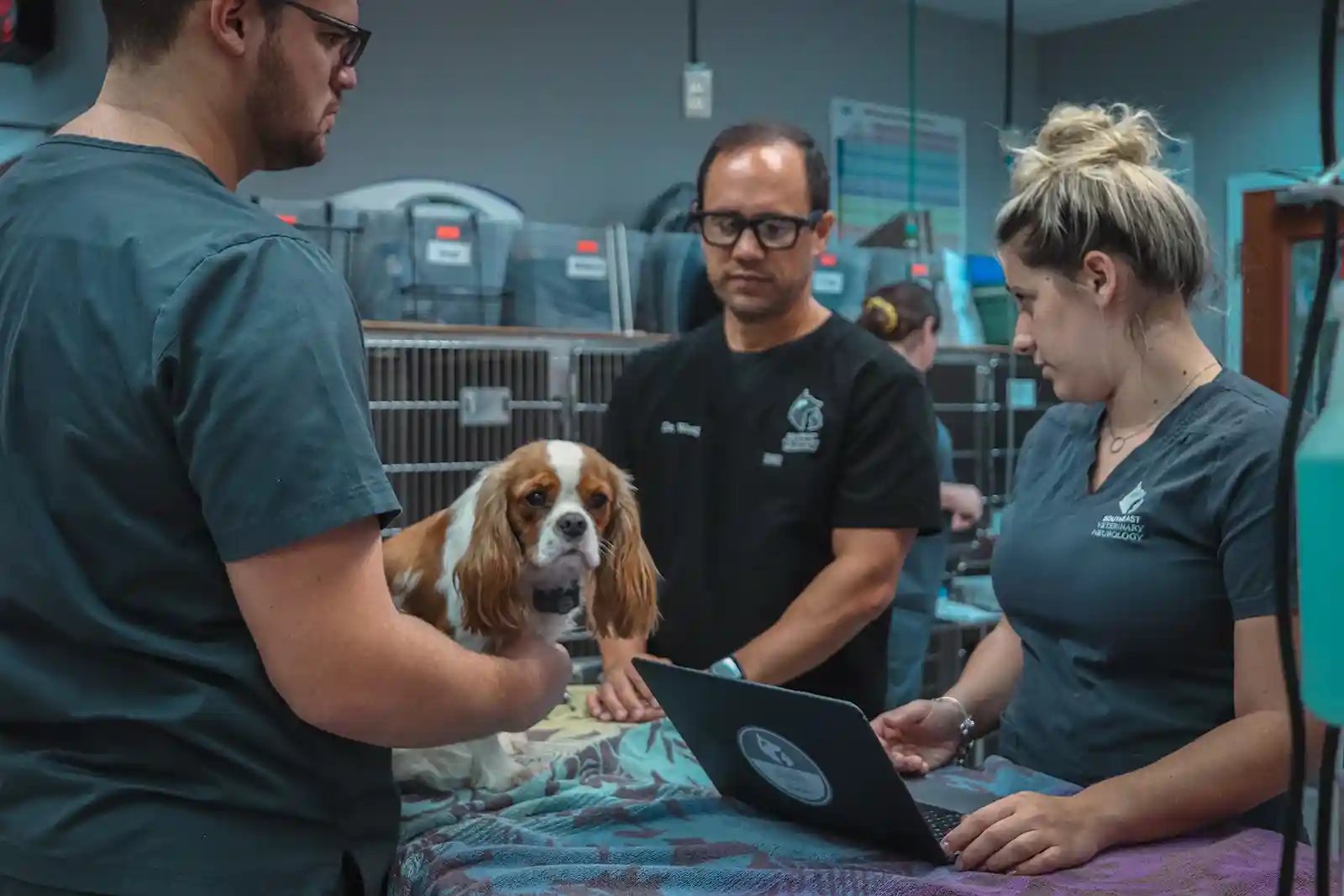
If you are comparing dog MRI options, don't be afraid to ask questions. A reputable veterinary team should be willing to explain what your pet is receiving and why.
Before scheduling, consider asking:
- What type of MRI scanner is used, low-field or high-field?
- Who performs my dog's neurological examination?
- Who determines what areas are imaged and what sequences are performed?
- How long will my dog be under anesthesia?
- How is my dog monitored during anesthesia and recovery?
- Who interprets the MRI?
- How quickly will I receive the results?
- What happens if the images are not sufficient to make a diagnosis?
- Can my dog receive treatment or surgery at the same facility?
- What exactly is included in the quoted price?
These questions can help you compare the entire diagnostic process, rather than simply the price of the scan.
Choosing a Dog MRI Provider Is Choosing More than a Machine
When your dog needs an MRI, you are not just choosing between machines.
You are choosing:
-
The specialist who examines your dog
-
The practitioner who determines what needs to be imaged
-
The medical professionals responsible for anesthesia and monitoring
-
The clinician who interprets the images
-
The team that will help you understand what the findings mean
-
The expert who determines what happens next
So when you're deciding where to have your dog MRI performed, the most important question isn't “How much does it cost?” It's “Will my dog receive the imaging quality and neurological expertise needed to have the best chance of getting better?”
Southeast Veterinary Neurology provides dog MRI and specialized neurological care for dogs and cats in Miami, Boynton Beach, Jupiter, and Virginia Beach. Our goal is never simply to obtain an MRI. It’s to get your pet the right diagnosis, help you understand what it means, and determine the best next steps. Behind every MRI is a pet that needs help and a family looking for answers. Reach out today.

Frequently Asked Questions about Dog MRI
Where can I get a dog MRI?
A dog MRI can be performed at a specialty veterinary hospital, veterinary imaging center, or other facility with appropriate MRI equipment and anesthesia capabilities. Southeast Veterinary Neurology provides high-field dog MRI in South Florida and Virginia Beach.
How do I choose the best place for a dog MRI?
The best place for dog MRI depends on your pet’s needs, but it is important to look beyond price and consider whether the provider uses low-field or high-field MRI, along with neurological expertise, anesthesia and monitoring, and what happens after the MRI.
How much does a dog MRI cost?
The cost of a dog MRI varies based on the provider, MRI technology (low-field vs. high-field), and what is included in the price, such as the neurological exam, bloodwork and pre-anesthetic testing, anesthesia and monitoring, IV catheter and fluids, contrast, hospitalization and recovery care, interpretation, and any additional imaging needed.
Is there an affordable dog MRI?
Yes, but the lowest advertised price may not be the lowest overall cost if the dog MRI provides less detailed images or the price does not include services such as the neurological exam, bloodwork and pre-anesthetic testing, anesthesia and monitoring, IV catheter and fluids, contrast, hospitalization and recovery care, interpretation, or additional imaging.
Is a low-cost dog MRI worth it?
Price alone does not dictate the value of a dog MRI. The type of MRI scanner (including low-field vs. high field), quality of the images, neurological expertise, interpretation of the images, and what happens after the diagnosis can all affect the value. The lowest-priced MRI is not necessarily the lowest-cost option if it does not provide the answers you need.
What is the difference between high-field and low-field MRI for dogs?
A high-field dog MRI can provide more detailed images and shorter scan times than lower-field systems, which can be particularly valuable when evaluating the brain and spinal cord.
Does a dog need anesthesia for an MRI?
Yes, a dog MRI requires general anesthesia, because even small movements can affect image quality. A specially trained veterinary team should tailor anesthesia to your dog and closely monitor it throughout the MRI and recovery.
What questions should I ask before scheduling a dog MRI?
Ask whether low-field vs. high-field MRI is used, who examines your dog and determines what to image, how long your dog will be under anesthesia and how it is monitored, who interprets the MRI, when you receive results, what happens if additional imaging is needed, whether treatment or surgery can be done at the same facility, and what the quoted price includes.
Is an MRI safe for dogs?
MRI is generally safe for dogs, but it requires anesthesia. A specially trained veterinary team should tailor anesthesia to your dog and closely monitor it throughout the MRI and recovery.
How long does it take to get MRI results for a dog?
At a specialty neurology hospital, where the same veterinary neurologist examines your dog, oversees the MRI, and interprets the images, results and a treatment plan may be available the same day. At other facilities, MRI interpretation may need to be scheduled separately, which can mean waiting longer for results and treatment.