
Like us, dogs rely on a complex nervous system made up of the brain, spinal cord, nerves, and muscles to navigate life. Together, these structures allow the body to sense the world through vision, touch, smell, hearing, and balance and to respond by coordinating movement, posture, and behavior. Every step your dog takes and every interaction your dog has depends on precise communication within this system.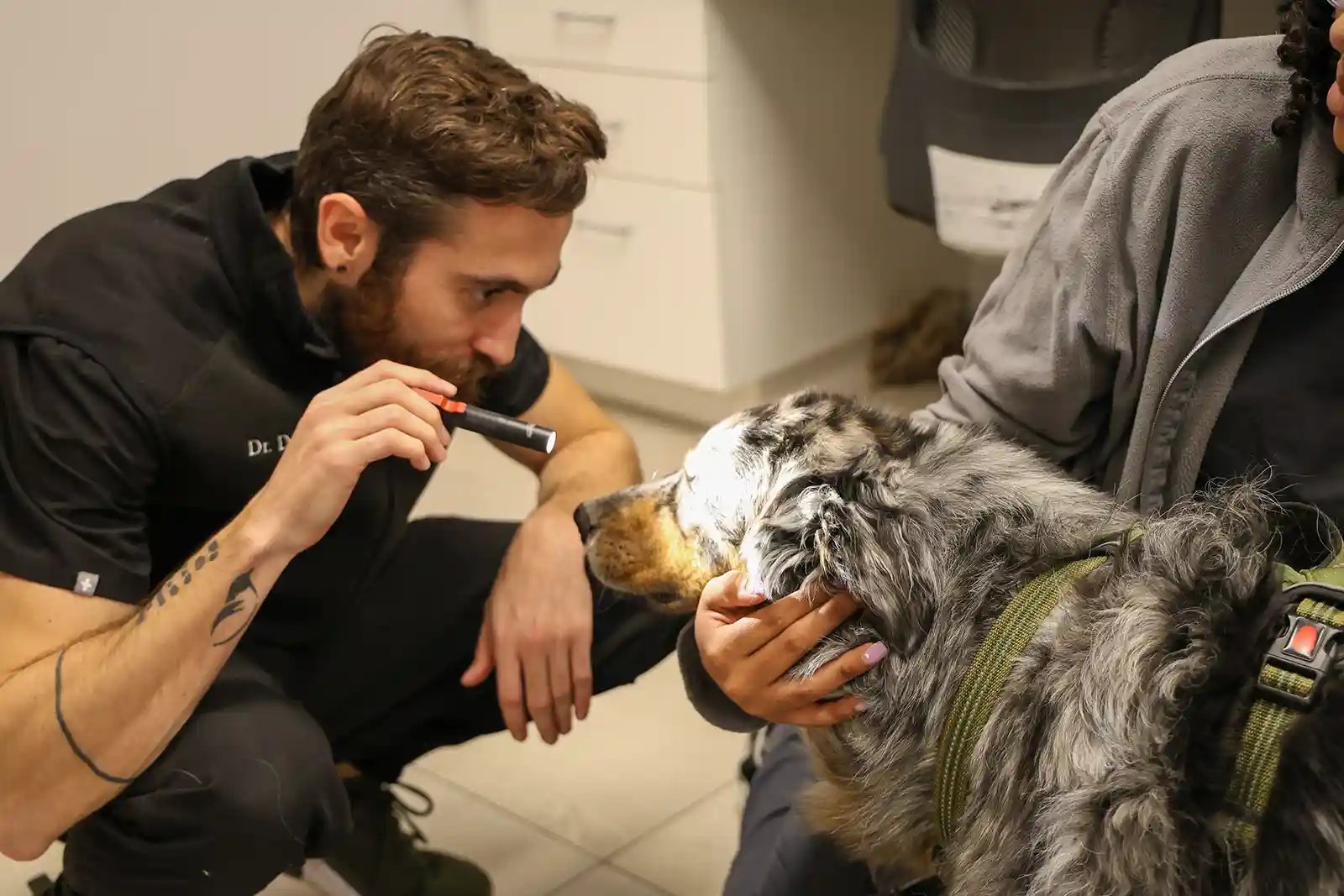
What Neurological Symptoms in Dogs Can Tell Us
Neurological symptoms in dogs rarely point to a single diagnosis. Many different neurological diseases produce overlapping signs, which means the signs themselves cannot tell us exactly what disease your dog has.
What these signs can tell us, however, is where in the nervous system the problem is located. Veterinary neurologists use patterns of neurological symptoms in dogs to determine whether a condition is affecting the brain, spinal cord, or nerves and muscles. This process, called localization, is the foundation of neurological diagnosis and allows us to select the most appropriate tests needed to reach an accurate diagnosis.
Understanding how symptoms relate to different parts of the nervous system can also help pet parents recognize problems earlier and seek the most appropriate care.
Neurological Symptoms in Dogs That Suggest Brain Disease
When neurological symptoms in dogs originate in the brain, they often affect awareness, behavior, balance, or the whole body at once. Because the brain controls perception and coordination, dogs with brain disease may seem mentally different even before major physical changes appear.
Common neurological symptoms in dogs caused by brain disease include:
- Behavior or personality changes
- Confusion or disorientation
- Seizures or tremors
- Loss of balance or incoordination
- Leaning, falling, or rolling to one side
- Walking in circles
- Head pressing
- Head tilt
- Sudden blindness
- Abnormal eye movement or position
Altered awareness is one of the clearest indicators that neurological symptoms in dogs are originating in the brain.
Some brain disorders that cause neurological symptoms in dogs include:
- Brain tumors
- Hydrocephalus
- Inflammatory brain diseases
- Vestibular disease
- Strokes
- Chiari-like malformation
Because the brain controls many functions at once, brain disorders often cause multiple neurological symptoms simultaneously.
Neurological Symptoms in Dogs That Suggest Spinal Cord Disease
The spinal cord carries signals between the brain and the rest of the body. When neurological symptoms in dogs originate in the spinal cord, the most noticeable problems are usually pain along the spine and difficulty walking.
Common signs of spinal cord disease in dogs include:
- Holding the head low or arching of the back
- Limp tail
- Reluctance to jump or move
- Muscle spasms
- Whining
- Difficulty standing up
- Wobbly walking or stumbling
- Scuffing or dragging paws
- Inability to walk
- Paralysis
- Incontinence
Because the spinal cord runs from the base of the skull to the base of the tail, the location of the problem matters. Disorders affecting the neck (cervical spine) often involve all four legs, while conditions affecting the mid- to lower back (thoracic or lumbar spine) typically impact the rear legs.
Several neurological diseases affect the spinal cord in dogs, such as:
- Atlantoaxial (AA) luxation
- Syringomyelia
- Discospondylitis
- Fibrocartilaginous embolism (FCE)
- Intervertebral disc disease (IVDD)
- Degenerative myelopathy
- Vertebral malformations
Dogs with spinal cord disease are typically alert and mentally normal, but their bodies do not respond normally to signals from the brain, resulting in weakness, incoordination, or paralysis despite a normal mental state.
Neurological Symptoms in Dogs That Suggest Nerve or Muscle Disease
Peripheral nerves and muscles allow dogs to generate strength and maintain posture. When neurological symptoms in dogs originate in the nerves or muscles, the most noticeable problem is usually reduced strength rather than loss of coordination.
Neurological symptoms seen with peripheral nerve and muscle disorders in dogs include:
- Getting tired quickly
- Weakness that worsens with activity
- Short or hesitant steps
- Collapse after exercise
- Difficulty holding the head up
- Muscle loss
- Tremors during movement
- Weak bark
- Difficulty swallowing
- Floppy or weak limbs
Dogs with nerve or muscle disease usually remain bright and alert, but they struggle with strength and endurance.
Here are some conditions known to impact nerves and muscles in dogs:
- Myasthenia gravis
- Polyneuropathy
- Polymyositis
- Tick paralysis
- Muscular dystrophy
- Myotonia
These conditions typically cause fatigue and reduced strength rather than imbalance or confusion.
Emergency Neurological Symptoms in Dogs
Some neurological symptoms in dogs require immediate veterinary evaluation because early treatment can significantly affect outcome.
Seek urgent care if your dog develops:
- A seizure lasting more than 3 minutes
- Multiple seizures in a 24 hour period
- Collapse
- Paralysis
- Sudden blindness
In neurological disease, timing matters. Conditions such as spinal cord compression, inflammatory brain disease, strokes, or toxin exposure can worsen quickly. Prompt assessment improves the chances of stabilizing the condition and preventing permanent damage.
When to See an Expert for Neurological Symptoms in Dogs
Recognizing neurological symptoms in dogs is the first step toward finding answers. Although many neurological diseases share similar signs, careful evaluation of symptom patterns allows veterinary neurologists to determine whether a problem is affecting the brain, spinal cord, or peripheral nerves and muscles. This localization process is essential for choosing the right diagnostic tests and treatments.
If your dog is showing neurological symptoms such as weakness, seizures, imbalance, difficulty walking, or just not acting itself, early evaluation can make an important difference. The specialists at Southeast Veterinary Neurology are dedicated to helping pet parents decode their dog’s neurological symptoms, understand the underlying condition, and access advanced diagnostic and treatment options focused on long-term comfort and quality of life.
If you are concerned about neurological symptoms in dogs, our team is here to help guide you and your veterinarian toward clear answers and the best possible care. Request a consultation today in Miami, Boynton Beach, Jupiter, or Virginia Beach!
Frequently Asked Questions about Neurological Symptoms in Dogs
What are the early signs of neurological problems?
Early neurological symptoms in dogs may include stumbling, weakness, behavior changes, head tilt, tremors, or seizures. Subtle signs such as neck or back pain and reluctance to jump can be early indicators of neurological disease as well.
How do dogs act when they have neurological problems?
Dogs with neurological problems may show changes in behavior, confusion, weakness, tremors, seizures, loss of balance, difficulty walking, head tilt, or sudden blindness. The specific signs depend on whether the brain, spinal cord, or nerves and muscles are affected.
What causes sudden neurological issues in dogs?
Sudden neurological symptoms in dogs can be caused by brain disease, spinal cord disorders, nerve and muscle disorders, or trauma.
What toxins can cause neurological symptoms in dogs?
Neurological symptoms in dogs can be caused by toxins such as chocolate, caffeine, xylitol, human medications, rodenticides, insecticides, and some plants. If your dog shows sudden weakness, tremors, or seizures after possible exposure, seek veterinary care immediately.
What are red flag neurological symptoms?
Red flag neurological symptoms in dogs include sudden paralysis, collapse, seizures lasting more than three minutes, more than one seizure within 24 hours, sudden blindness, loss of coordination, or inability to stand or walk. These signs require immediate veterinary attention to prevent permanent damage.
What neurological symptoms shouldn’t be ignored?
Neurological symptoms in dogs that shouldn’t be ignored include sudden weakness, imbalance, seizures, collapse, difficulty walking, sudden blindness, head tilt, or persistent tremors. Prompt veterinary evaluation is important to identify the cause and start treatment early.
When should I worry about neurological symptoms in dogs?
You should seek veterinary care immediately if neurological symptoms in dogs include seizures, collapse, paralysis, severe imbalance, or sudden behavior changes. Any persistent neurological signs should be evaluated by a veterinarian.
How do vets check for neurological problems in dogs?
Veterinarians perform a neurological exam to localize the lesion. Based on findings, they may recommend advanced tests such as MRI, CT, spinal fluid analysis, or blood work to identify the underlying cause.
Are neurological symptoms in dogs treatable?
Many neurological symptoms in dogs are treatable, especially when diagnosed early. Treatment may include medications, surgery, rehabilitation therapy, or long-term disease management depending on the underlying condition.