
Is there anything more agonizing than witnessing your dog having a seizure? The overwhelming sense of helplessness you experience may weigh heavily on your heart, but the best thing you can do is keep yourself calm and your pup safe while you wait for it to end. Though it can seem like an eternity, most seizures will be over within 30 seconds to a minute.

If you think your dog may have come into contact with any toxins that cause seizures in dogs, you should head directly to your veterinarian or the nearest emergency facility for evaluation. In the meantime, understanding seizures, and which everyday items may be dangerous, can help you recognize risks and act quickly in the future.
Causes of Seizures in Dogs
Seizures are unusually strong bursts of electrical activity in the brain that result in loss of consciousness and convulsions of the body and limbs. However, in cases of partial or focal seizures, the dog will typically remain conscious and may have abnormal movements of just a single body part, such as an ear or limb.
There are many reasons why dogs have seizures:
- Idiopathic (epilepsy with no identifiable cause, possibly genetic, is most common)
- Symptomatic (resulting from structural changes within the brain such as congenital malformations, inflammation, infection, stroke, or tumors)
- Reactive (resulting from metabolic disorders or exposure to toxins affecting the brain)
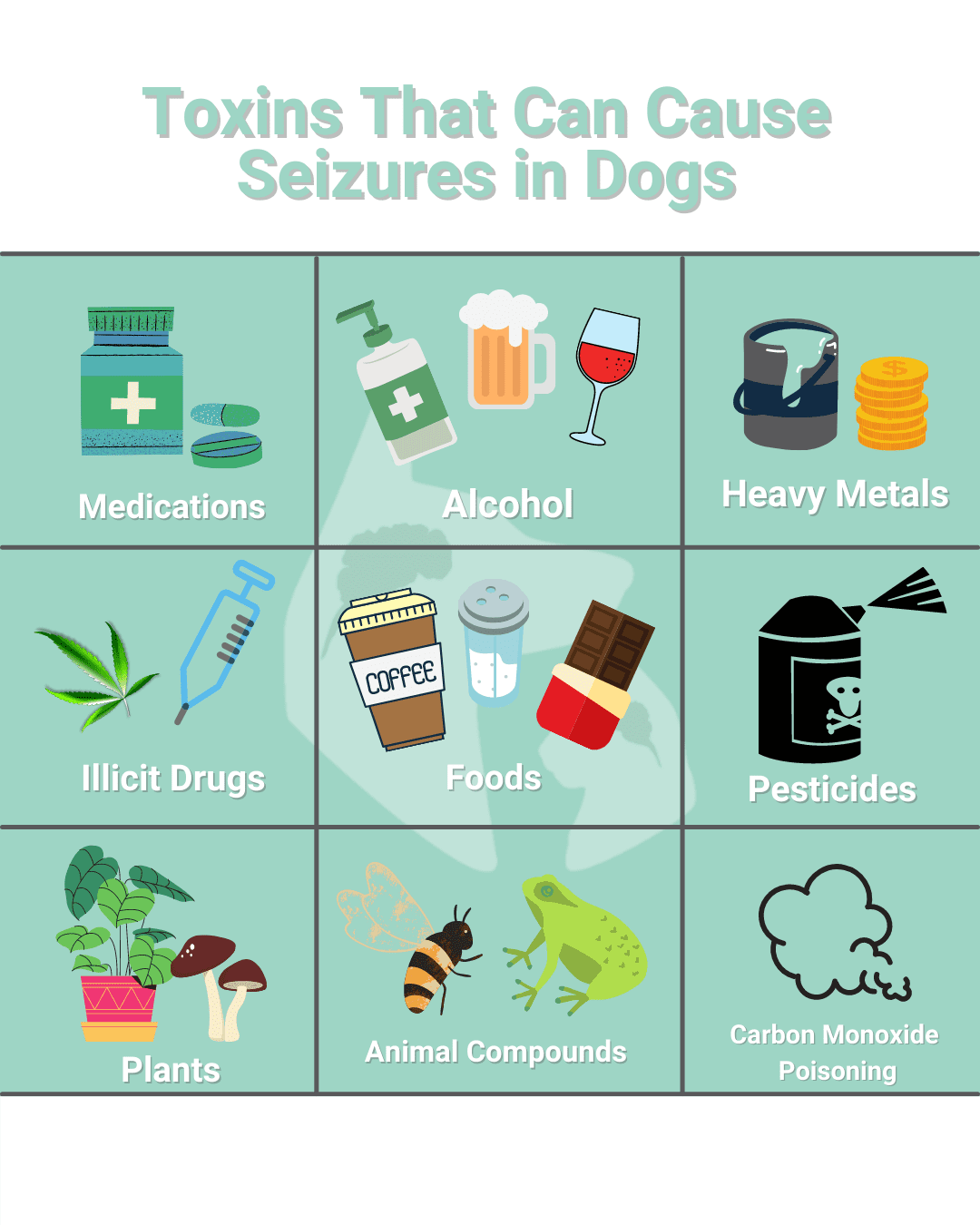
While toxins may not be the number one cause, the ASPCA reports over 200,000 cases of pet poisoning every year in the United States. Toxins that cause seizures in dogs can range from smoke inhalation and salt ingestion to sago palms and killer bees.
Toxins That Cause Dog Seizures
Alcohols
Household alcohols considered toxins that cause seizures in dogs:
- Ethanol (alcoholic beverages, raw bread dough)
- Isopropanol (rubbing alcohol)
- Methanol (varnishes, shellacs, paints, windshield washer fluids, adhesives)
- Ethylene Glycol (antifreeze)
Animal Compounds
Common animal toxins that cause seizures in dogs:
- Bufo Toad
- Killer Bees
Carbon Monoxide Poisoning
Carbon Monoxide Poisoning, due to smoke inhalation, is another toxin that can cause dog seizures.
Foods
Household foods known as potential toxins that cause seizures in dogs:
- Methylxanthines (caffeine, dark chocolate)
- Salt Poisoning (excessive seawater, table salt or Play-Dough ingestion)
- Xylitol (artificial sweetener)
Heavy Metals
Toxic metals that can cause dogs to have seizures:
- Lead (lead-based paint)
- Zinc (pennies)
Illicit Drugs
Illicit drugs that can bring on seizures in dogs:
- Amphetamines
- Methamphetamines
- Cocaine
- Marijuana
- Opiates
Medications
Common human medications recognized as toxins that cause seizures in dogs:
- Analgesics (Aspirin and Ibuprofen)
- Antidepressants (SSRIs and TCAs)
- Theophylline (asthma medication)
- Chlorpheniramine (antihistamine)
- 5-Fluorouacil (cancer medication)
- Beta-Blockers (cardiac medication)
- Decongestants (Ephedrine and Pseudoephedrine)
- Muscle Relaxants (Baclofen, Carisoprodol, Methocarbamol, Tizanidine and Cyclobenzaprine)
Pesticides
Everyday pesticide toxins that cause seizures in dogs:
- Bromethalin (rodenticide)
- Metaldehyde (snail bait)
- Organophosphates and Carbamates (weed killers)
- Pyrethrines and phyrethroids
- Strychnine
- Zinc Phosphate (mole bait)
Plants
Another common group of toxins that cause seizures in dogs is plants, including:
- Brunfelsia (“yesterday, today, tomorrow”)
- Mushrooms (panther cap, fly agaric, gemmed amanita, Smith’s amanita, warted amanita)
- Humulus Lupulus (Hops)
- Sago Palm
Signs of Dog Seizures Caused by Toxins
Signs of seizures are the same, regardless of the cause. Seizures in dogs caused by toxins will look the same as any other seizure.
The most frequent signs of dog seizures are:
- Stiffening
- Collapsing
- Loss of consciousness
- Muscle twitching
- Jerking body movements
- Paddling motions with their legs
- Drooling or foaming at the mouth
- Chomping or tongue chewing
- Involuntary defecating or urinating
What to Do if Your Dog Has a Seizure from a Toxin
Despite the frightening display, seizures are not painful. As difficult as it may be, avoid touching or holding your dog during an episode. It will not help, and you run a high risk of being bitten accidentally.
However, here are some things you can do if your dog is having a seizure:
- Prevent your dog from falling off furniture, down stairs, or into water
- Protect your dog from hurting itself on anything else in the area
- Time the seizure
- Record a video if possible
- Call your vet
If you think your dog has come into contact with any toxins that cause seizures in dogs, it is an emergency. Stay calm, but act quickly:
- Call your vet or a veterinary poison control service below
- Scour the home or property for potential exposure
- Gather the remaining potential poison
- If your dog has vomited, collect the sample
ASPCA Animal Poison Control Center (APCC)
(888) 426-4435
24 hours a day, every day of the year
A consultation fee may apply
Pet Poison Helpline
(855) 764-7661
24 hours a day, every day of the year
$59 fee including follow-up calls
If your dog has a seizure that lasts more than three minutes, it is also an emergency. Take your dog to a veterinarian immediately - do NOT wait for it to end. The longer the seizure goes on, the higher the risk of serious and potentially fatal complications.
Call Southeast Veterinary Neurology if Your Dog Is Having Seizures
If you have any questions about seizures in dogs caused by toxins or any other trigger, our veterinary neurologists at Southeast Veterinary Neurology (SEVN) are here for you and your best friend 365 days a year. We have locations in Miami, Boynton Beach, Jupiter, and Virginia Beach, with teams of expert and compassionate professionals at each one. Contact any of our locations today!