
MEDICAL REVIEW BY: DR. CHRISTINE SENNECA, DVM, DACVIM (NEUROLOGY)
When a dog starts dragging a paw, stumbling, or losing strength in the back legs, degenerative myelopathy (DM) may be a possible explanation. But it is not the only neurological disease that can cause these changes. Knowing what conditions can be mistaken for DM in dogs is important because some are quite treatable, and early diagnosis can make a difference in your dog's quality of life and long-term outlook.
What Is DM in Dogs?
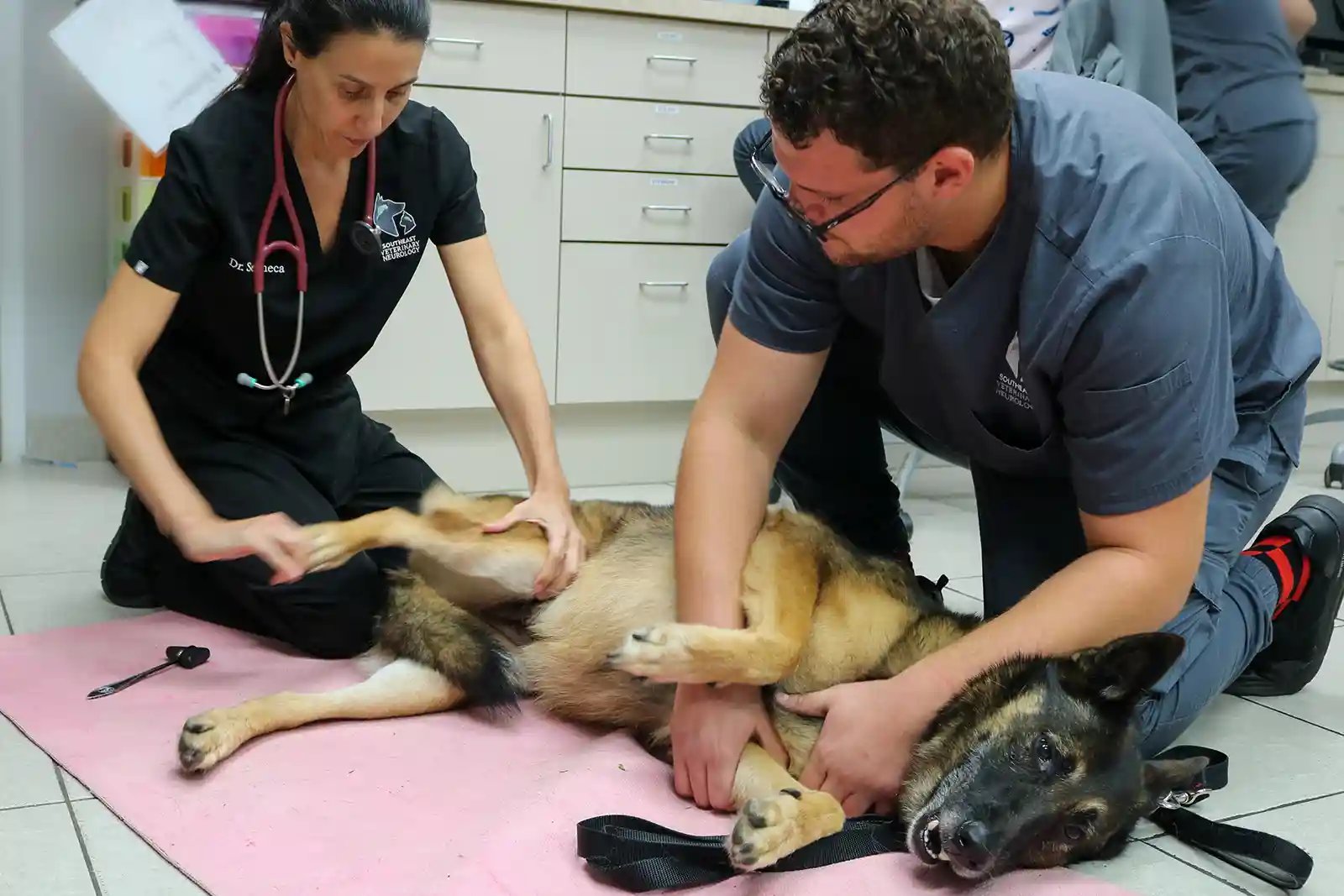
If you’re here, you probably already know that DM in dogs refers to degenerative myelopathy, a progressive neurodegenerative disease that affects the spinal cord. DM is often associated with inherited genetic variants that increase a dog's risk of developing the condition. These variants are linked to degeneration of nerve fibers within the spinal cord that carry signals between the limbs and brain. DM typically affects older dogs, especially German shepherds, boxers, and corgis, although dogs of other breeds can also develop the disease.
What are signs of DM in dogs?
DM in dogs typically begins with subtle changes in the hind limbs. A dog may scuff the toenails, have difficulty rising, or appear unsteady when walking. Usually one limb is affected first. As the disease advances, weakness and loss of coordination become more severe. Eventually, affected dogs lose the ability to walk and become paralyzed, but, fortunately, the condition is not painful.
Can DM in dogs be treated?
There is currently no cure for DM in dogs, and no treatment has been shown to stop its progression. Supportive care, including physical rehabilitation and mobility assistance, can help maintain function and quality of life as the disease advances. However, degenerative myelopathy is a terminal disease, as ascending paralysis will eventually affect the muscles involved in breathing. The progression typically occurs over the course of 9-12 months, but may be longer.
What Can Be Mistaken for DM in Dogs?
Several neurological conditions can resemble DM in dogs, specifically if your dog develops gradually worsening hind-limb weakness or incoordination, including:
- Intervertebral disc disease (IVDD) can cause spinal cord compression, leading to weakness, incoordination, or paralysis.
- Spinal cord tumors can progressively interfere with nerve signals, affecting your dog's ability to walk.
- Other compressive spinal cord disorders such as wobbler syndrome, subarachnoid diverticula, and vertebral malformations put pressure on the spinal cord and cause similar neurological problems.
- Inflammatory or infectious spinal cord disease such as granulomatous meningoencephalomyelitis (GME) and infectious myelitis can sometimes cause progressive weakness and incoordination.
IVDD and spinal cord tumors may be two of the closest mimics and are particularly important to rule out in dogs with hind-limb weakness. While signs of these conditions can overlap, their treatment options and prognoses can look quite different.
How Can IVDD Resemble DM in Dogs?
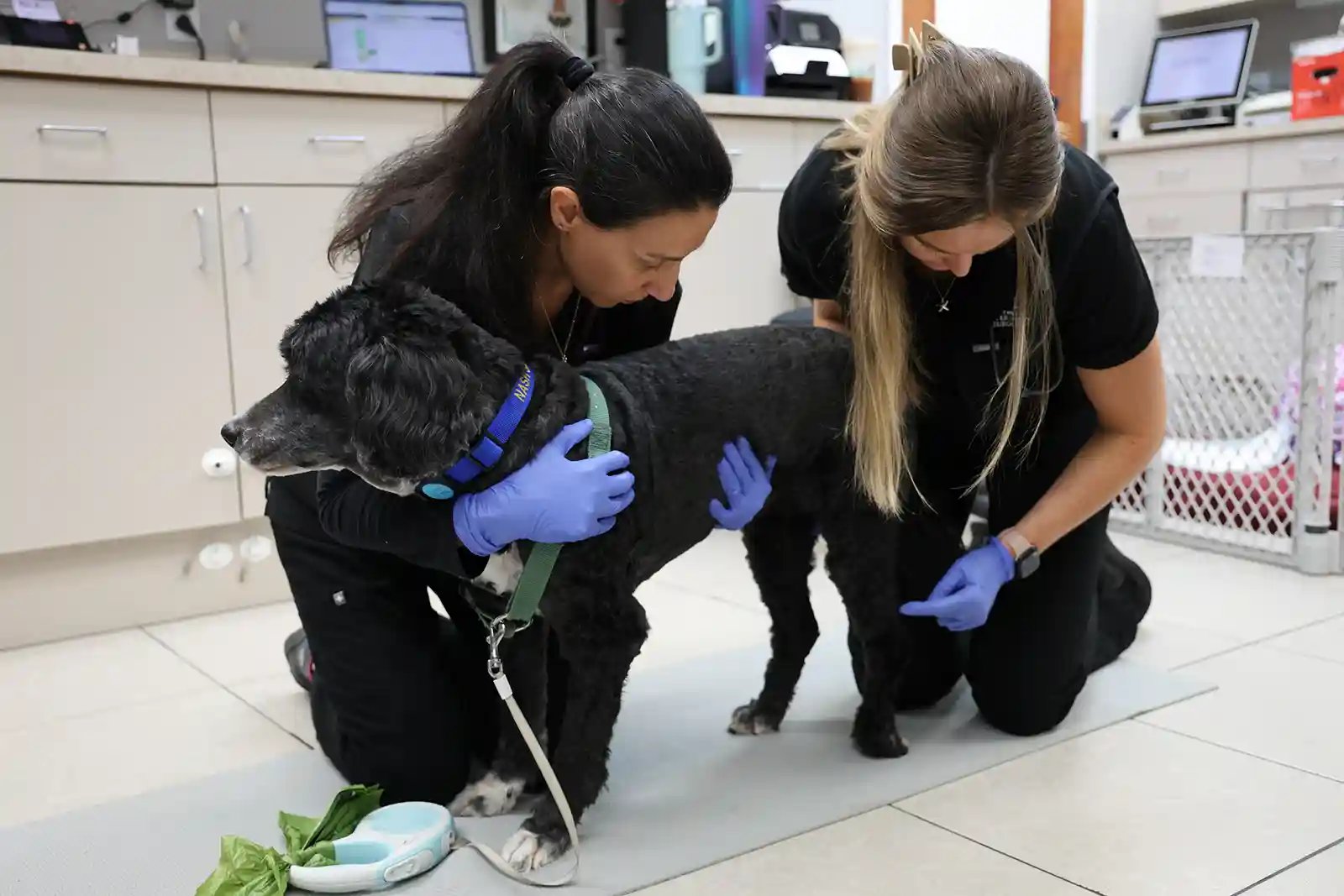
IVDD is an important condition to consider when a dog develops hind-limb weakness or incoordination. IVDD occurs when an intervertebral disc degenerates or herniates, and presses against the spinal cord, interfering with signals traveling between the brain and limbs.
In older dogs, chronic disc protrusions, often associated with Hansen type II IVDD, develop gradually and cause progressive spinal cord compression. This can produce a pattern of worsening weakness and incoordination that closely resembles degenerative myelopathy.
Both IVDD and DM in dogs can cause knuckling, stumbling, paw dragging, and progressive hind-limb weakness that may eventually lead to paralysis.
What is the difference between ivdd and dm in dogs?
One important distinction is pain. While DM in dogs is not painful, IVDD often causes neck or back pain. However, dogs with IVDD do not always show obvious discomfort, so the absence of pain does not rule it out.
Breed can also provide useful context. IVDD is especially common in chondrodystrophic breeds, such as dachshunds, French bulldogs, and beagles, although the more chronic form that most closely resembles degenerative myelopathy is not limited to these breeds and commonly affects larger dogs.
The progression and severity of neurological signs can also differ. IVDD can develop suddenly or gradually, depending on the type. While gradual, progressive weakness can resemble DM, sudden weakness or paralysis would suggest another condition.
Can IVDD be treated?
Unlike DM in dogs, IVDD is not an inevitably terminal disease. Even when a dog experiences severe weakness or paralysis, treatment may relieve spinal cord compression and restore neurological function.
Depending on the severity of the injury and the dog's neurological status, treatment may involve strict activity restriction and medication or surgery to remove herniated disc material and relieve pressure on the spinal cord.
Some dogs may have lasting mobility limitations and require long-term assistance, such as a wheelchair, but paralysis from IVDD does not mean it’s the end of a dog's life. With appropriate treatment and supportive care, many dogs can continue to enjoy a good quality of life, even if they are permanently paralyzed.
This is a critical distinction from degenerative myelopathy, which continues to progress despite supportive care, eventually affecting the respiratory muscles in the end stages.
How Can Spinal Cord Tumors Resemble DM in Dogs?
Spinal cord tumors can arise from the tissues surrounding the spinal cord, the spinal cord itself, or nearby structures. Some grow within the spinal cord, while others compress it from the outside. As a tumor grows, it can interfere with the signals traveling through the spinal cord and cause progressively worsening neurological signs.
Like DM in dogs, spinal cord tumors can cause gradual hind limb weakness, incoordination, and difficulty walking. When a tumor grows slowly, its signs may resemble the gradual decline associated with degenerative myelopathy. Both conditions are important considerations in older dogs with progressive neurological changes.
What is the difference between spinal cord tumors and DM in dogs?
Spinal cord tumors can cause pain, changes in sensation, or signs that affect one side of the body more than the other. These differences may help a neurologist determine whether a tumor or another condition is more likely.
Can spinal cord tumors be treated?
Unlike DM in dogs, some spinal cord tumors can be treated or controlled. Depending on the tumor's type, location, and how advanced it is when diagnosed, treatment may involve surgery to remove or reduce the tumor, radiation therapy, or chemotherapy. These treatments may relieve spinal cord compression, slow tumor growth, and help preserve neurological function and mobility.
Not all tumors respond to treatment, and prognosis varies. However, unlike degenerative myelopathy, spinal cord tumors may have treatment options that can help dogs maintain mobility and enjoy more time with their families.
How Can You Tell if Your Dog Has Degenerative Myelopathy?
Although the similarities and differences between these conditions can offer important clues, they cannot definitively distinguish them from DM in dogs. Instead, they help a veterinary neurologist narrow down the possible causes of your dog's symptoms and determine which diagnostic tests are needed.
There is a genetic test that can identify the genetic variants associated with an increased risk of degenerative myelopathy. Dogs that have two copies of the gene mutation are much more likely to develop the condition than dogs with only one copy, or dogs that are negative. However, no test can definitively confirm DM in a living dog, so veterinarians generally make a diagnosis by ruling out other conditions that might explain the symptoms and considering the results of the genetic test.
Can MRI diagnose DM in dogs?
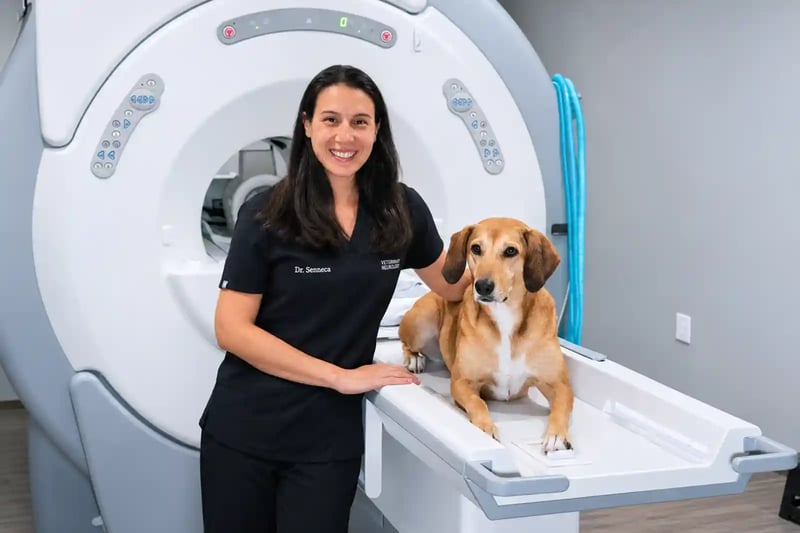
While MRI cannot confirm DM in dogs, it is an important part of ruling out other conditions that can cause similar neurological signs. MRI is especially important because it provides detailed images of the spinal cord and surrounding structures. It can reveal disc material compressing the spinal cord, spinal cord tumors, and other structural abnormalities that may cause signs resembling degenerative myelopathy.
Depending on the findings, additional testing, such as bloodwork or cerebrospinal fluid analysis, may be recommended to investigate inflammatory, infectious, or other conditions. If imaging and other diagnostics do not reveal another explanation for clinical signs consistent with the disease, DM may become the most likely diagnosis.
What Should You Do if Your Dog Has Signs of DM?
Age, breed, and symptoms alone cannot confirm DM in dogs. If your dog is experiencing hind-limb weakness, a thorough evaluation by a veterinary neurologist is important. Without appropriate diagnostic testing, a potentially treatable condition could be mistaken for degenerative myelopathy, leaving your dog without an opportunity for treatment that might change the course of its life.
At Southeast Veterinary Neurology (SEVN), our board-certified veterinary neurologists combine specialized experience, advanced diagnostics, and compassionate care to help you determine the best path forward for your family. With locations in Miami, Boynton Beach, and Jupiter, Florida, plus Virginia Beach, Virginia, we're here to help you find answers in times of uncertainty and hope when you need it most. Request a consultation today.
Frequently Asked Questions about DM in Dogs
What can be mistaken for DM in dogs?
Several neurological conditions can resemble DM in dogs, including intervertebral disc disease (IVDD), spinal cord tumors, wobbler syndrome, spinal arachnoid diverticula, and inflammatory or infectious spinal cord diseases.
What are the first signs of DM in dogs?
Early signs of DM in dogs typically include scuffing the back toenails, dragging a hind paw, knuckling, stumbling, and difficulty getting up.
How fast does DM progress?
DM in dogs typically progresses over months to years, but the rate varies. Most dogs gradually lose coordination and strength in the hind legs, eventually eventually progressing to paralysis.
How long will a dog with DM live?
DM in dogs is ultimately fatal, and many dogs are euthanized approximately one year after clinical signs begin, although the rate of progression varies.
Are dogs in pain with DM?
DM in dogs is generally considered nonpainful because it causes degeneration of the spinal cord rather than painful compression.
What dog breeds get DM?
DM can affect many breeds, but it is more strongly associated with certain genetic risk variants in breeds such as German shepherds, boxers, and corgis.
At what age do dogs get DM?
DM most commonly affects older dogs, with signs typically beginning around 8 years of age or later.
Can a blood test detect degenerative myelopathy in dogs?
A genetic test using a blood sample or cheek swab can identify gene variants associated with an increased risk of DM in dogs. However, a positive result does not definitively confirm DM.
Can degenerative myelopathy in dogs come on suddenly?
No. DM in dogs develops gradually, with neurological signs worsening over months to years.
How to slow down degenerative myelopathy in dogs?
There is no treatment to stop or reverse DM in dogs. Physical rehabilitation, mobility assistance, and supportive care may help maintain quality of life, but do not prevent disease progression.